🥔
potibo
🔁
🎨
🌐
English
简体中文
繁體中文
日本語
한국어
Español
potibo
Dots style
Grok Bot style
Home
Updates
Timeline
Meme guide
What they're up to
All
🥔 poteto
🔁 Tibo
▶ Videos
November 2026
Tibo
·
Nov 10, 05:09 AM
♥ 3.2K
Dots can now control many machines in addition to its own little cloud computer that we provide by default.
poteto
·
Nov 9, 07:32 PM
♥ 3.3K
reset rolling out!
poteto
·
Nov 9, 05:16 PM
♥ 1.7K
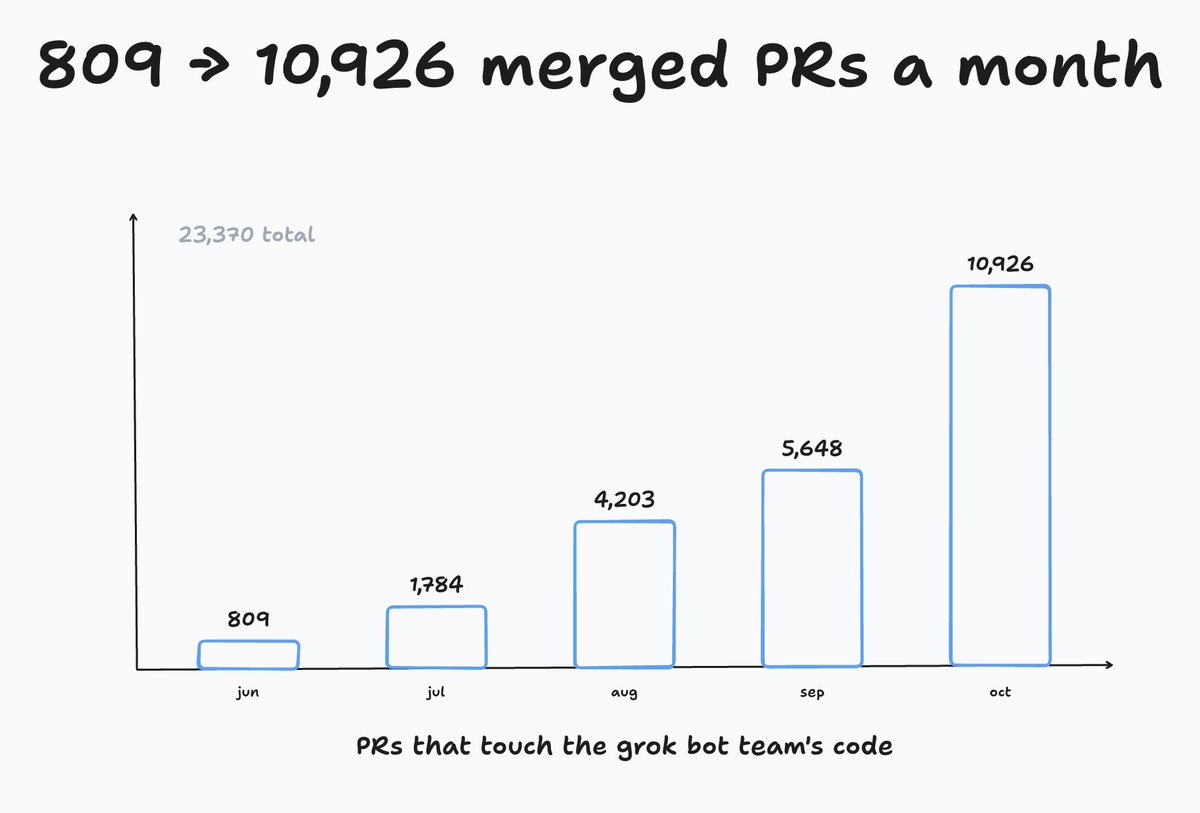
excited to be speaking at @aiDotEngineer this wednesday at 10:10am PT! i will be talking about how the grok @bot team shipped 11,000 PRs last month without compromising on code quality hope to see you there: https://ai.engineer/code/2026/schedule?day=2026-11-11&session=1373446
poteto
·
Nov 9, 04:08 PM
♥ 8.7K
we are entering a renaissance in programming language and runtime research, and a golden age of software testing and verification it’s time to rewrite all software
poteto
·
Nov 8, 08:02 PM
♥ 4.8K
try this next “use /create-formal-verification-skill to model these state machines, one skill per subsystem. and use /statechart to visualize my most important user flows” both skills are in pstack https://github.com/cursor/plugins/tree/main/pstack
poteto
·
Nov 8, 06:18 AM
♥ 1.4K
i asked grok bot to make a video about how the music in http://tibo.dog was made! i started by clumsily describing something i wanted (i have 0 experience making music): gameboyish music, seamlessly transitioning between variations of a main melody like another game i had played (genshin) one prompt i tried that helped me communicate my goal better was telling bot "i lack the vocabulary to describe what i want" and using the /sharpen skill from pstack. then the /in-your-own-words skill helped me confirm whether or not it understood what i was trying to say i also used this same trick when making this video, so my agent produced a storyboard and animatic before working on the full thing knowing the right words is very powerful
Tibo
·
Nov 8, 05:45 AM
♥ 11.5K
Would a Pro 50 make sense? Wdyt?
Tibo
·
Nov 8, 05:09 AM
♥ 9.4K
Saw some confusions, but all Pro plans have no 5-hour limits, and give the following usage compared to Plus. ✅ Pro 100 = 10X ✅ Pro 200 = 20X ✅ Pro 500 = 50X, access to ultrafast
Tibo
·
Nov 7, 06:27 AM
♥ 1.8K
Cyber
Tibo
·
Nov 7, 05:30 AM
♥ 2K
Quite cool what you can do with a single prompt these days 👀
Tibo
·
Nov 7, 01:03 AM
♥ 7.7K
It's Friday
Tibo
·
Nov 6, 08:29 PM
♥ 170
More things to come, join our Cyber at the Frontier livestream on November 12, 10am PT: https://openai.com/cyber-at-the-frontier
poteto
·
Nov 6, 07:54 AM
♥ 8.1K
hot take: you don't need a software factory, and i don't love the term. it's just marketing all you need is good software engineering and investing your tokens in the right places. the more deterministic the better (and token efficient)
Tibo
·
Nov 6, 05:01 AM
♥ 2.3K
Formal proofs of tens of millions of lines of code are not a ridiculous thing anymore and within the realm of what should be considered when designing new systems.
Tibo
·
Nov 6, 05:00 AM
♥ 14.7K
I can confidently say that humans were not very good at writing secure infrastructure. The endstate will be hypersecure infrastructure and software for all, but we're going to go through some turbulence before we reach that.
poteto
·
Nov 6, 02:23 AM
♥ 92
Update 1 coming soon
Tibo
·
Nov 5, 10:26 PM
♥ 643
If I count well, that's more than 500M images per day.
Tibo
·
Nov 5, 10:24 PM
♥ 4K
Wild stat. We are now generate more than 4B images per week across ChatGPT and the API, up from the more than 3B per week only 8 weeks ago.
Tibo
·
Nov 5, 08:43 PM
♥ 2.2K
Come push the frontier of fluffiness
poteto
·
Nov 5, 06:52 PM
♥ 2.9K
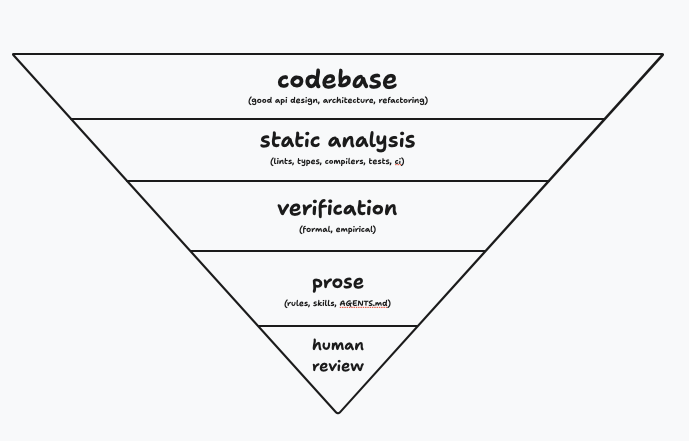
while i'm quite bullish on formal methods, i think it's worth tempering expectations and doing your own research on it (disclaimer: i am not an expert in it). it cannot guarantee your code is bug free, only that it matches the spec under certain assumptions, and the specs come from what people want, not math. as long as we build software for humans, nothing can prove that your spec is right, only you can judge. i created the /statechart skill in pstack primarily because it helps make the state machines implicit in your code more obvious and legible to you, so you can shrink the review surface and review the work at a higher level: does it actually match your intent and goal? i used this skill a ton while building my game http://tibo.dog, below you can see the statechart for story mode where i was able to find many bugs with it. in that sense, i think model checking (eg TLA+ with TLC) is quite useful for understanding and checking properties of your system e2e, and you don't have to write tons of new verification code for it. the spec isn't your actual code so there's always a risk of drift, but so far i've had good experiences finding actual bugs with it. i tend to pair it with empirical verification (running the code) also to confirm it's real other types of formal verification like proving theorems (eg Lean, Dafny), bounded model checking (eg CBMC, Kani) etc have their own tradeoffs. proofs cover every possible input, but only for the properties specified, and it takes a lot more code/work. bounded model checking can run on your actual code, which avoids drift, but it only checks up to a certain number of steps, so it's better at finding bugs than proving there aren't any so i think in the near-medium term you'll still need to layer your codebase: constraints and guardrails (types, lint rules, api design, refactoring), empirical verification (tests, evals, real usage), and formal verification for the parts that really need it. none of these catch everything on their own, but layered together, they catch a lot more and shrink what's left for you to review but also maybe in the limit, the bitter lesson will prevail and flawless code will just be printed out perfectly every time with no bugs. even in that scenario, /statechart still seems very helpful in confirming that the agent understood your intent correctly. give it a try if you haven't already! https://github.com/cursor/plugins/tree/main/pstack/skills/statechart
Tibo
·
Nov 5, 05:56 PM
♥ 4.2K
Our latest cyber-specialized model is out. It's in its own league on many cyber-specific use cases. Available through Daybreak Red access.
Tibo
·
Nov 5, 07:54 AM
♥ 3.6K
Follow Samir for dot updates
Tibo
·
Nov 5, 07:47 AM
♥ 4K
Privilege to work alongside so many amazing people who won’t rest until we materialize a better future.
Tibo
·
Nov 5, 01:02 AM
♥ 3.6K
We’ve assembled a world class cyber team and I’m excited for us to share more about our work over the weeks and months.
Tibo
·
Nov 5, 12:29 AM
♥ 6.7K
Welcome Cat. Stoked to be building together soon.
poteto
·
Nov 4, 06:43 PM
♥ 86
oh also to be clear this PR chart is all PRs to grok bot, not just mine
poteto
·
Nov 4, 06:00 PM
♥ 28
made you a hacker cat
Tibo
·
Nov 4, 04:54 PM
♥ 4.1K
Computers have RAM, right? Welcome Pierre. Let’s reinvent everything
poteto
·
Nov 4, 04:26 PM
♥ 2.8K
some fun slides from my upcoming talk @aiDotEngineer very excited to share how we ship crazy amounts of code (30x'd) without reading it, yet perf is as good if not better then when we launched there's a lot more to improve of course, and the ceiling is far from being reached, but given the relentless shipping speed and our high bar for polish, i think that our agent friendly architecture bets are paying off at taming the slop fun fact: ~230 people landed at least 1 PR to grok bot in october!
Tibo
·
Nov 4, 07:54 AM
♥ 6.2K
ChatBLT
Tibo
·
Nov 3, 10:31 PM
♥ 11.4K
Things will change again and again and again. We’re still very early and agents today are incredible, and yet so frustrating still. Can’t wait to crack things to get that flow state back. Long journey ahead.
poteto
·
Nov 3, 10:27 PM
♥ 1.3K
shop with @bot save with @bot ship with @bot bot makes your work and life so much easier. it pays for itself many times over!
Tibo
·
Nov 3, 05:29 AM
♥ 10.7K
Le GPT Fat
poteto
·
Nov 3, 02:04 AM
♥ 11.2K
maybe a hot take but i now consider adversarial reviews mostly a waste of tokens. far better to use those tokens on empirical combined with formal verification. i have updated pstack to use the interrogate skill less, and eventually i think i may remove it altogether i have found very little value with code review in the abstract, agents tend to just get lost in the nitpicks and yagnis
Tibo
·
Nov 3, 12:26 AM
♥ 3.6K
We know some Git-fu. Excited the team is finally able to talk about it a bit. Massive props to @tnm and team
poteto
·
Nov 2, 09:19 PM
♥ 1.3K
hire grok bot! if you want to setup a data bot like this for yourself, tag @bot and ask it to read the post and guide you through it
poteto
·
Nov 2, 06:51 PM
♥ 2.2K
wow, almost 100k non-story games have been played since http://tibo.dog launched! the real game is much more fun than the story mode btw if you like the game and want me to continue adding some content, please let me know your ideas and feedback in the replies 🤍 since launch i've added 17 new languages, made some balance adjustments so it's more fun while giving a challenge, and am upgrading all the visual effects. i have some ideas on a new gear system too! i will also find some time soon to share more details about how i built the game so quickly with lots of polish
Tibo
·
Nov 2, 03:51 PM
♥ 2.5K
Your dot will choose the best model for the task, drawing on different models for different parts of the work.
Tibo
·
Nov 2, 03:50 PM
♥ 11.4K
Fellow resetters, heads up that we're working on expanding the family of frontier models that power dots, including GPT-6 Astra and GPT-6.1 Terra and some others in the future. Terra brings speed and a nice personality upgrade, and will help us bring dots to more people.
poteto
·
Nov 2, 12:00 AM
♥ 349
cc @DavidKPiano i think u will like these charts
October 2026
poteto
·
Oct 31, 05:18 PM
♥ 624
more tips: • routines help your bot be more proactive. you can setup a scheduled one, like “check our issue tracker every morning for new bugs”, or a subscription routine that responds to something happening, like “whenever i get an email from client X, automatically summarize and add their feedback and suggestions to my notion doc” • routines can be expensive if they fire too often. hourly is the most frequent interval i would recommend for scheduled ones, and for a subscription you should filter the events first • ask your bot to write code for you to automate tasks! code is much more efficient as it doesn’t require as many tokens as the bot doing the task itself. just ask your bot which parts of your workflows could be turned into scripts and skills instead. and tell it to store the scripts in a private github repo • if you work on a team plan, share your bot in slack! it’s a great way to share workflows with your colleagues, and to reuse high quality bots your team already maintains • think like a manager: how do you get bots to do your tasks with the same or even better quality than you can? if you can setup your bots this way, this frees you up to do much more ambitious things
poteto
·
Oct 31, 05:01 PM
♥ 10.7K
here’s a short grok bot guide on how i create high quality bots and manage my team. ask @bot to read this post and help you improve your team! • add dr eggbot to your team! he’s my bot designer that i use to create bots • you don’t need a lot of bots. a few good bots can be more useful and easier to manage than a large team • tell your bots to create skills for itself as you give it instructions on how to do tasks. this lets them do them more consistently even over long conversations. you can even ask it to create a private github repo for you to store all your skills if you want them preserved independently • add connectors, use the vault, and give access to all the tools you use to do your work. you can also ask your bot to setup its own email and it can sign up for its own accounts for better separation • thinking about all the work you do by hand, or steps in your workflows where you have to copy and paste information back to your bot. ask your bot how it can do that for you instead! • imagine you hired an intern, how would you onboard them and help them do the work correctly and efficiently? introduce yourself to your bot and describe the work you do, then ask it how it can help you automate it and my favorite tip: use voice mode or the transcription option! it’s a good way to just brain dump a lot of information. then, at the end, tell your bot to “restate this in your own words” so you can confirm it understood you https://x.ai/bot/_jOdbfkB16zxu7MRcmReE
Tibo
·
Oct 31, 05:42 AM
♥ 14.5K
Day 26/ You can now easily switch between multiple accounts on mobile, and coming soon to desktop too. Next two days will be resets… banked… do with this what you may 👀. https://help.openai.com/en/articles/20001068-using-multiple-chatgpt-accounts-on-web-and-mobile
poteto
·
Oct 30, 10:52 PM
♥ 2.5K
show me the all the cool charts you've made with /statechart! and bugs that you've found using the /create-formal-verification skill you can install pstack here: https://github.com/cursor/plugins/tree/main/pstack
poteto
·
Oct 30, 03:34 PM
♥ 6K
we will need to rebuild and rewrite much of software to adapt to a new, faster pace. code used to arrive one drop at a time. soon, if not already, code will be written as if it were a continuous stream, like a violent river twisting and turning as it pleases. this is not a new thing: big tech cos have had to deal with this with the enormous scale of their engineering teams. but now ai has brought an incredibly elastic and capable workforce wielded by every engineer. this is your problem now, and the only way to adapt is to evolve your systems so agents - even and especially the ones with little context about the right way of doing things - can thrive. make the easy thing the right thing. your codebase is becoming organic architecture. agent contributions grow around the constraints and guardrails you’ve designed. good software engineering matters even more now! and no, the continuous stream of code is not something you have to watch helplessly. be more ambitious and design systems, frameworks, and languages to control the chaos. the time for mourning coding is long over
Tibo
·
Oct 29, 07:35 PM
♥ 4.8K
Send your kind feedback to this person
poteto
·
Oct 29, 06:55 PM
♥ 7.2K
the /statechart skill in pstack v0.15.36 is now stable and ready for use! it's best combined with /create-formal-verification-skill to abstractly model state machines and distributed systems to find bugs. the skill contains a mini tlc compiler that parses, lowers to a small IR, and has a backend that outputs mmd syntax. if you want you can also ask your agent to create charts in whatever style you like, the skills tells it to use https://pele.run/ which is very themeable so you can make blueprints, hand drawn encyclopedia illustrations or whatever you like here's a chart of the /statechart skill and 2 real bugs i just found. try it out and let me know what you think!
Tibo
·
Oct 29, 04:56 PM
♥ 39.2K
Day 25/ We are doubling all usage limits for all Pro 100/200/500 tiers and Business Premium, effective today. We heard your kind feedback and won’t be reducing usage limits for Pro 200, so your Work and Codex usage will stay the same. We’re also going to continue offering extended limits for dots for now, and usage of your dot will still continue to be separate from your default usage. And we'll of course also keep shipping better models and other efficiency improvements that increase your effective usage over time.
poteto
·
Oct 29, 03:34 AM
♥ 652
shop with grok bot!
Tibo
·
Oct 29, 01:49 AM
♥ 4K
Day 24/ Text your dot just like anyone else. Makes it super easy to share/forward things, leave it voice notes or you can even go creative with "Hey Siri, text Iggy to <INSERT WILD REQUEST>" and sit back and relax.
Tibo
·
Oct 28, 11:35 PM
♥ 6K
Team is working on this but it's not rolling out just yet, sorry for any confusion. Plan is to bring together best of both Chat / Work capabilities together at some point this year, but we're going to proceed carefully here and take our time. We'll have more to share soon.
poteto
·
Oct 28, 11:28 PM
♥ 3.3K
grok bot told me to post this
poteto
·
Oct 28, 12:41 AM
♥ 1.1K
the shipping intensifies
poteto
·
Oct 27, 05:26 PM
♥ 2.2K
the Grok Bot team ships quality at an incredible pace! we've invested in making our code friendly for agents, by making the easy thing the right thing. engineers, designers, and PMs all contribute multiple hundreds of PRs a day: fixing bugs, polishing the user experience, and making our apps faster and more reliable. it isn't perfect of course and we do make mistakes, but we aim to learn from each occurrence and improve our workflows so our bots don't make the same mistake twice. i personally think that Grok Bot is the best example today in the industry of where all those tokens are going: quality and velocity, without compromise. something i think people forget in the discussion around token usage is that software development is an iceberg - new features are only a small fraction of the work in maintaining high quality software. and we will keep accelerating and improving!
poteto
·
Oct 26, 08:38 PM
♥ 892
hire grok bot!
Tibo
·
Oct 26, 07:24 PM
♥ 10.5K
Day 22/ Terra is back! Our first model that is significantly better at writing, personality and nuanced understanding of requests. Packs a punch across the board, very good at computer use, and gives 2X more usage than 6.1 Sol across API and subscriptions.
poteto
·
Oct 26, 05:34 PM
♥ 1.3K
what are you going to ship this week with grok bot?
poteto
·
Oct 26, 07:54 AM
♥ 2.7K
so many gems and great tips in this talk from @yminsky about how to improve your codebase for agents • agents thrive on feedback, and types are one of the best kinds • make illegal states unrepresentable with types, and it enforces global rules across your codebase • property based tests, fuzzing, and even full-system deterministic simulation testing • expect tests: just print stuff out and capture it in the test. makes behavior legible. it's very similar to how compilers have fixture tests, it reduces the review surface area • formal methods used to be very expensive: seL4 is about 8,700 lines of C and took around 25 person-years, with 23 lines of proof for every line of C code, but agents change the roi https://www.youtube.com/watch?v=rUYP4C29yCw
poteto
·
Oct 26, 06:43 AM
♥ 2.6K
i am really excited to see all the innovation that's going to happen with programming languages in the next few years
Tibo
·
Oct 26, 05:48 AM
♥ 4.1K
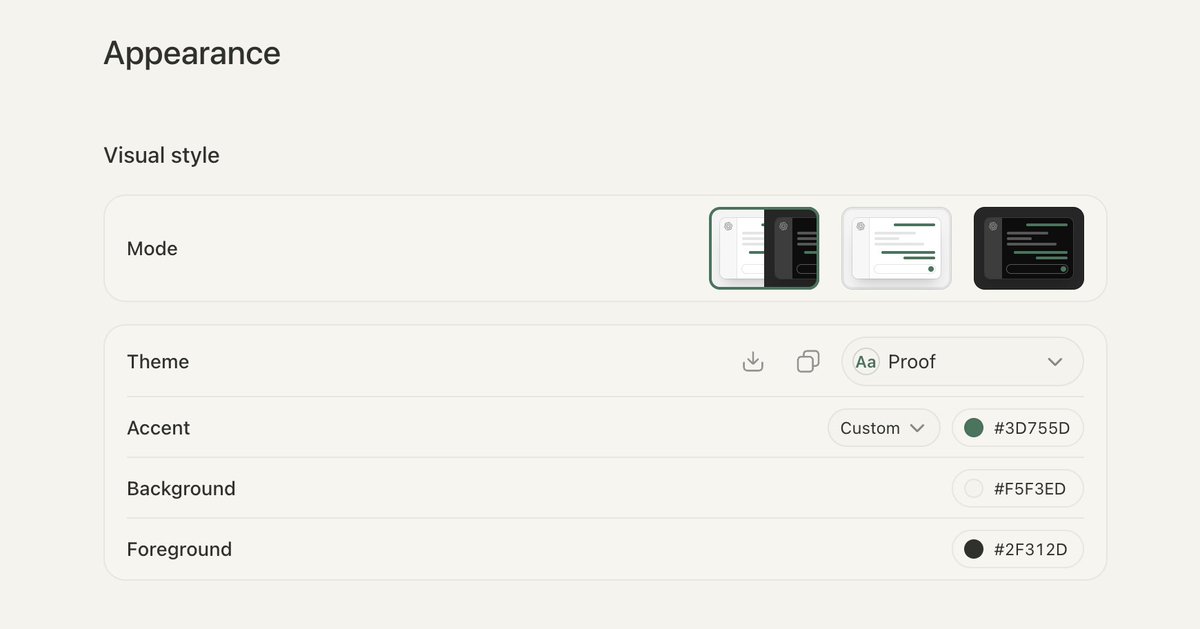
Reminder you can customize the appearance of chatgpt on web and make it soothing https://chatgpt.com/settings/appearance
poteto
·
Oct 26, 05:05 AM
♥ 6K
glad i blocked this toxic guy a while ago when he was being condescending to someone else. also meta has its own scm and my commits aren’t all public 🤡
poteto
·
Oct 26, 02:21 AM
♥ 1.3K
the only moat left is sybau 💔
poteto
·
Oct 26, 02:00 AM
♥ 1.9K
few know this
poteto
·
Oct 26, 01:53 AM
♥ 2.7K
seems like i broke my record
Tibo
·
Oct 25, 06:06 AM
♥ 5.7K
It is all propagated. Enjoy some mad codexing tomorrow. Fun week ahead too.
Tibo
·
Oct 25, 03:39 AM
♥ 11.9K
Day 20/ Rest and reset
poteto
·
Oct 24, 08:42 PM
♥ 2.2K
wrote about this in my pstack guide! https://x.com/poteto/article/2097732320606507506
Tibo
·
Oct 24, 07:21 PM
♥ 8.6K
DM if you want to help scale dots to 1B users and have done similar things in the past
poteto
·
Oct 24, 07:07 PM
♥ 1.5K
one of my favorite things to do is to have our bots collaborate with each other! just add your bots to slack and work alongside them like teammates 🤍
Tibo
·
Oct 24, 04:26 PM
♥ 5.9K
Saturday is for fixing bugs while sipping coffee. What are some great places to hangout in SF?
Tibo
·
Oct 23, 11:13 PM
♥ 1.8K
On codex cli updates. We've added reusable prompt presets, inline model and permission settings, and enterprise MCP sign-in. We've also fixed failures when resuming long sessions and added Windows corporate-proxy authentication. Surprisingly the CLI has grown 2X in usage since devday.
Tibo
·
Oct 23, 11:12 PM
♥ 8.3K
Day 19/ Small updates. Calls connect much faster for dots, changing reasoning in codex & work mid conversation does not invalidate cache anymore and a we've also updated the codex cli.
poteto
·
Oct 23, 08:04 PM
♥ 1.7K
stay safe with grok bot!
Tibo
·
Oct 23, 04:47 AM
♥ 3.1K
Landing tomorrow before 10am PST together with a small ship.
poteto
·
Oct 23, 12:24 AM
♥ 1.9K
the grok bot team is shipping at a incredible pace! please keep sending us your feedback and bug reports, we will continue working hard on improving and polishing grok bot so it's the best assistant and employee you can hire
Tibo
·
Oct 22, 06:55 AM
♥ 3.3K
Lands tomorrow before 10am PST.
poteto
·
Oct 20, 01:33 AM
♥ 3.1K
You Can Ship Everything
poteto
·
Oct 19, 07:29 PM
♥ 156
watch this thread and based on what you know about me and my work, propose ideas to improve my bots and workflows
poteto
·
Oct 19, 06:15 PM
♥ 2.5K
what did you get done with grok @bot last week?
Tibo
·
Oct 17, 04:21 PM
♥ 2.8K
Landing sometime today by EOD PST
Tibo
·
Oct 17, 12:15 AM
♥ 915
Also we just added slides support yesterday, try it out. Currently available in Pro, Business and Enterprise while we learn from your feedback.
Tibo
·
Oct 17, 12:14 AM
♥ 2.7K
What is ChatGPT Space, that is the question. Endearingly awkward at times because it's the actual team working on it. What would you like to see next?
Tibo
·
Oct 16, 11:57 PM
♥ 872
And update your app to enjoy this gem https://x.com/Gavmn/status/2111136119945396436
Tibo
·
Oct 16, 11:56 PM
♥ 1.7K
We also significantly improved GPT-6 Pro for all pro users https://x.com/OpenAI/status/2111192259073094035
Tibo
·
Oct 16, 11:55 PM
♥ 11.3K
Day 12/ We’ve made improvements to Codex & Work that increase the effective usage you get. We achieved this by reusing context across subagents, keeping context cached longer, and improved request routing that allows us to increase cache hits.
poteto
·
Oct 16, 03:21 AM
♥ 4.8K
finally i can stop being scared of parallel parking
Tibo
·
Oct 15, 10:45 PM
♥ 4.2K
Bonjour
poteto
·
Oct 15, 03:44 PM
♥ 91
comments are unstructured and unenforceable text. agents do read them but they are often ignored, go out of date, and gives your agent an escape hatch to do a bandaid, hack or a workaround instead. use this prompt to audit your code comments to find opportunities to improve your code through stronger types, better API design, and create lint rules so the comments aren’t necessary! https://x.com/poteto/status/2110149626133438732?s=46&t=HFNOJ7P2JmfjDfKskFwLUw
poteto
·
Oct 15, 03:42 PM
♥ 160
here are some power pstack prompts you can try to upgrade your code, starting with this one (prompt is at the bottom of the post) refactoring to make your code friendlier to agents https://x.com/poteto/status/2106542593656111276?s=46&t=HFNOJ7P2JmfjDfKskFwLUw
poteto
·
Oct 15, 03:37 PM
♥ 4.9K
try pstack! it’s my personal set of skills for rigorous and autonomous engineering with agents. it’s updated frequently as I continue to tune and simplify them 10 second tutorial: 1. run /setup-pstack and choose your budget 2. add /poteto-mode in front of any prompt you want done rigorously 3. ask /poteto-help whenever you’re unsure what pstack skills to use 4. that’s it! Grok Bot: https://x.ai/bot/plugin/9717366 Cursor: https://cursor.com/marketplace/cursor/pstack Source: https://github.com/cursor/plugins/tree/main/pstack
poteto
·
Oct 14, 02:14 AM
♥ 2.8K
it won't be long before "have your bot talk to my bot" becomes common! some fun use cases of multiplayer grok bot over email could be: • debugging (you can send my bot bug reports!) • customer support • booking meetings and events • group buys • buying and selling stuff off craigslist what have you used bot mail for?
poteto
·
Oct 13, 04:39 PM
♥ 134
if you installed pstack through grok bot or cursor, it updates automatically! https://x.ai/bot/plugin/9717366
poteto
·
Oct 13, 04:37 PM
♥ 2.3K
this is now a new skill /in-your-own-words in pstack 0.15.23! extremely useful to ensure that you and your agent are aligned on the goal and that it understands your intent clearly
poteto
·
Oct 12, 05:39 PM
♥ 308
also please watch my talk https://x.com/poteto/status/2102050467505430555?s=20
poteto
·
Oct 12, 05:37 PM
♥ 4.6K
something that keeps bothering me is how some people see slop as something that is happening to them, like they're some kind of helpless bystander powerless to do anything about it excuse me but you are a software engineer, you literally learned how to make sand think and make computers do your bidding?! and now you can't do anything about it? please the 2 things you should know to cut through all the noise: 1. you need to give your agent a way to verify its own work (i just posted about this so won't rehash) 2. your codebase is memory the 2nd is not new either, we have always had lint rules, compilers with good diagnostics and strong type systems, LSPs, etc to help us write better code. there is no difference when agents write the code instead, you just need more of them, and stronger ones. forget rules and skills. you can add those later. yes, your codebase is a form of memory to agents! agents love extending what already exists. so every nit and every annoyance you've ever seen, every mistake and bad pattern you observe from agents, needs to turn into a constraint, or the agents will just keep repeating those same mistakes like a virus in your code. then you keep observing and repeating this process until your codebase is locked down enough that even agents with little context can one shot a high quality PR. an even better direction is to refactor/rewrite your code such that agent anti-patterns become categorically impossible. use type systems to your advantage, use libraries/frameworks that reduce the architectural search space, or heck, create your own framework like we did for grok bot and design high quality primitives and well thought out APIs
poteto
·
Oct 12, 04:54 AM
♥ 142
found a few smaller bugs also which i am fixing, but the fix in 0.70.2 was the biggest contributor to your desktop client going to sleep
poteto
·
Oct 12, 12:16 AM
♥ 1.9K
this is fixed and released in 0.70.2! rolling out now
Tibo
·
Oct 11, 11:48 PM
♥ 3.6K
With this change, we are not charging long context fees for GPT-6.1 Sol when drawing usage from the subscription.
Tibo
·
Oct 11, 11:45 PM
♥ 14.7K
Day 7/ We have increased default context length for GPT-6.1 Sol to 500k when used through Codex & Work, up from 272k or an ~ 80% increase. We will go higher in the future, but it helps reduce occurrence of compactions and with tasks that require keeping a lot of context and nuance over periods of time. It was carefully tested and is the new sweet spot for most of our users. You can still override it if you want to be higher our lower, with maximum context length of GPT-6.1 Sol of 1M.
poteto
·
Oct 11, 06:54 PM
♥ 4.4K
it's very interesting how many replies i've gotten about maintainability and clean code being still important. i would argue that that is no longer true and we all need to update our priors on what Good Code really means in 2026. clean code has always come at a cost - performance. indirection and making code readable/understandable for a human is not free, it often comes at the cost of worse performance. we have historically been okay with this because of Moore's Law and the fact that most code is not on the hot path. these principles also came from a time where humans maintained code. it made sense to optimize for humans then, but it makes less sense now when agents are already writing all the code. we will in fact probably discover and come up with new principles: principles of agent friendly architecture (i plan to write more thoughts about this soon)
poteto
·
Oct 11, 05:27 PM
♥ 92
poteto
·
Oct 11, 04:42 AM
♥ 114
also another interesting post i always come back to ever since @tomocchino shared it with me https://engineering.fb.com/2011/04/18/uncategorized/thoughts-on-software-quality/
poteto
·
Oct 11, 03:26 AM
♥ 680
tldr all code is slop
poteto
·
Oct 11, 02:35 AM
♥ 5.6K
codebases have always contained slop. we have always been okay with this because code rarely needs to be perfect, outside of mission critical "hard" (eg embedded) software. swe is a unique form of engineering because you're often building something that constantly evolves and is almost organic - user tastes change, your mental models evolve, and features come and go. admittedly, i and many others who've been coding for a long time were initially (like back in 2024) skeptical that agents would write production code. "but what about all the slop that would enter our beautiful codebase?". well, even before, we had human slop, and there was a lot of it! if we're being truthful, most people call "code i didn't write" slop. the reality is that 99% of people (i include myself in that number) don't even know what Good Code looks like, let alone be capable of writing it. i would propose that Good Code is: • correct • bug free • fast and cost efficient to run it has always been exceedingly difficult and expensive to write truly Good Code, because for the longest time (maybe @bendlang will change that), code was not something you could cheaply and formally guarantee to have all 3 of these properties. this is why writing hard software is much more difficult and expensive, because depending on the use case, you may only get one chance and so you have to be right from the start. but the vast majority of software we use does not need to be Good Code to provide value to users. in fact, it is very likely that most software we use is not formally verifiable! we accepted some bugs in exchange for velocity and progress, so we rely on tests and o11y instead and have adopted a more incremental approach. this is a good thing! agents help us move faster, and if you're open to the idea, are capable of helping us write better code. it won't be Good Code (that is still expensive), but it is likely to be much better on average at scale. the new craft of swe is to figure out how to do this. it's your job now! if your productivity with and without agents is not significantly different, you're doing something wrong. but it's not too late to embrace it and use it as an opportunity to learn a whole new skill tree
poteto
·
Oct 10, 08:52 PM
♥ 4.3K
i have so many cursor Projects running in parallel (16 right now) that my most used prompt has become "/bro catch me up on everything since my last message, and if there are any action items for me give me enough context (exec summary) to make a call"
poteto
·
Oct 10, 04:20 PM
♥ 1.1K
hey @bot read this whole quoted thread and suggest ideas for how you can help me with my work and my life
poteto
·
Oct 9, 11:15 PM
♥ 3.8K
on a related note, there's been some chatter recently about software engineering skills (eg the ruby/rust/elixir drama). i'm a bit torn because while i do feel like they're software engineering principles and patterns are still important, at the same time i wonder if there will come a point in time when they just won't matter anymore. not that they're no longer useful, but that your own intuition can fill in the gaps as you use agents in an intuitive sense rather than knowing explicitly what they're doing if that doesn't make sense, the analogy i have is the first iphone. 20 years ago you had to be a professional with expensive equipment, now just with a phone and some creativity you can film content that's compelling to a new audience. i don't know if there's a term for this but i want to call it "skill compression". where what used to be gatekept and prohibitive to experts becomes accessible to a new audience of creators with a whole new meta. the details have sort of faded away and now the craft is not in knowing the equipment and how to use it, but how you use it creatively we're going to see a whole new generation of builders who've never seen or written a line of code build incredible things
poteto
·
Oct 9, 10:42 PM
♥ 6.4K
i feel like swe interviews could probably collapse into just 2 technical rounds: • system design (how well can you articulate your ideas, do you actually know how to engineer something) • onsite project to build a real thing with agents (can you translate your intent into high quality outcomes) everything else we used to ask is no longer necessary
poteto
·
Oct 9, 05:41 PM
♥ 63
if you can't tag @bot, sign into https://grok.com with your Grok Bot email, then link your X account
poteto
·
Oct 9, 05:40 PM
♥ 720
ask your bot, or tag @bot on X to set this up for you!
poteto
·
Oct 9, 04:18 PM
♥ 423
if you’re new to coding, download my bot and ask it: “make me an engineer bot that uses cloud agents and pstack for coding work. it should make a project to group together related tasks” https://x.ai/bot/_jOdbfkB16zxu7MRcmReE
poteto
·
Oct 9, 03:50 PM
♥ 939
try coding with Grok Bot!
poteto
·
Oct 8, 08:29 PM
♥ 124
here’s where all my PRs come from (as of today)
poteto
·
Oct 8, 08:17 PM
♥ 4.1K
volume does matter look, i get it. if you were an engineer before agents came along, you're rightfully skeptical about lines of code and number of PRs being used as a metric for any kind of productivity. and i agree! or at least, i used to. for ease of explanation i will talk about this from the perspective as being an engineer on a large team of at least 50. volume didn't matter before because we focused on impact. you could have high impact even with a few PRs: for example you could make a one line config change and save the company millions of dollars. but before agents, the times where i saw volume come into the conversation were for the outliers. on the negative end you might have someone who is struggling to perform, on the other end you might have someone who was a "coding machine" archetype. a coding machine was someone who could just lock themselves in a room and emerge with a stack of PRs that solve a huge number of problems. so volume did matter, but only at the tail ends of the distribution, and combined with impact. if you've ever worked at a large tech company before, you'll get what i mean. the thing about agents is that big tech co problems are now small-medium co problems as well. how do agents change this calculus? well, everyone now has the ability to become a coding machine. you have incredibly capable frontier models that can write code better than any of us, at a rate much faster than we can. in this world, if you're still producing the same number of PRs as before, why wouldn't you pause to wonder why you're not being more productive? alien intelligence is here, and yet you can't outship a human coding machine? this brings me back to why i keep talking about trust (https://x.com/poteto/status/2102050467505430555). if you haven't put in the work to trust your agent's output, it is very difficult to scale up your productivity. and yes, this approach does require more tokens, but i think about this in terms of cost per intelligence. before agents, this cost was very high - you needed to hire many software engineers with high 6 figure salaries to do the work. tokens are still expensive today, but are likely to get cheaper over time (https://x.com/theo/status/2107924138094703084) factoring in the cost of intelligence. what looks exorbitant today will likely be affordable in 6 moths to a year. a single engineer with agents can do the work of tens if not hundreds of engineers, at a fraction of the cost. the reality that i don't think has hit yet is that job of the software engineer has truly changed. our job is not merely to produce software any longer (well tbh it was never only about the code, but bear with me for the sake of the explanation), but the machine that writes the software. this idea of a software factory, or a Michelin kitchen as i like to call it, is still a topic of research. and it's the type of stuff i like to share, not to flex, but to show you what's possible when you put a lot of rigor into using agents at scale
poteto
·
Oct 8, 04:28 PM
♥ 102
if you want to tag @bot, be sure to sign into https://grok.com with the email you use for Grok Bot and then link your X account!
poteto
·
Oct 8, 04:25 PM
♥ 1.8K
hi @bot look out for interesting things people are doing with Grok Bot on X and slack me a daily digest at 9am. if there’s anything relevant, pick the coolest ideas and suggest how I can use it to improve my workflow
poteto
·
Oct 7, 10:37 PM
♥ 119
also this is available for all users, with no need to set up the X connector
poteto
·
Oct 7, 10:37 PM
♥ 1.7K
ask your Grok @Bot to monitor X for user feedback on your products! send feature requests to your issue tracker, bug reports to a cursor cloud agent or project to triage and fix the loop is complete
Tibo
·
Oct 7, 09:03 PM
35:01
OpenAI’s Tibo Sottiaux doesn’t want humans to be an ‘afterthought’
▶ YouTube · Pioneers of AI
Tibo
·
Oct 7, 07:19 PM
♥ 20.1K
Day 3/ The big one is GPT-6 in Chat, but today is also a little celebration day with a new high of 40M active users across Codex and ChatGPT Work. Loading a banked reset in everyone's paid accounts. See you again tomorrow!
poteto
·
Oct 6, 10:33 PM
♥ 82
and we also support @Atlassian https://x.ai/bot/plugin/717
poteto
·
Oct 6, 10:19 PM
♥ 1.6K
I talk a lot about Grok Bot on Slack, but did you know you can also add @MicrosoftTeams? https://x.ai/bot/plugin/63354504
Tibo
·
Oct 6, 08:56 PM
♥ 5.1K
Roundup of Day 2/ 2.1/ Approve for me (auto-review) is now included and does not use usage. Can be between 2-10% of plan when used. Also better for you. 2.2/ Simplified API for builders. 2.3/ Meeting notes integrated. 2.4/ Decisions API live for builders. Will use in the app to improve the experience.
Tibo
·
Oct 6, 07:09 PM
♥ 2.8K
Day 2.2/ OK this one is smaller, but we removed some friction for when building on the API. Happy building.
poteto
·
Oct 6, 05:51 PM
♥ 217
this was all possible because we have a high quality verification skill (https://github.com/cursor/plugins/blob/main/pstack/skills/create-verification-skill/SKILL.md)! create one of your own using pstack https://x.ai/bot/plugin/9717366
poteto
·
Oct 6, 05:43 PM
♥ 2.9K
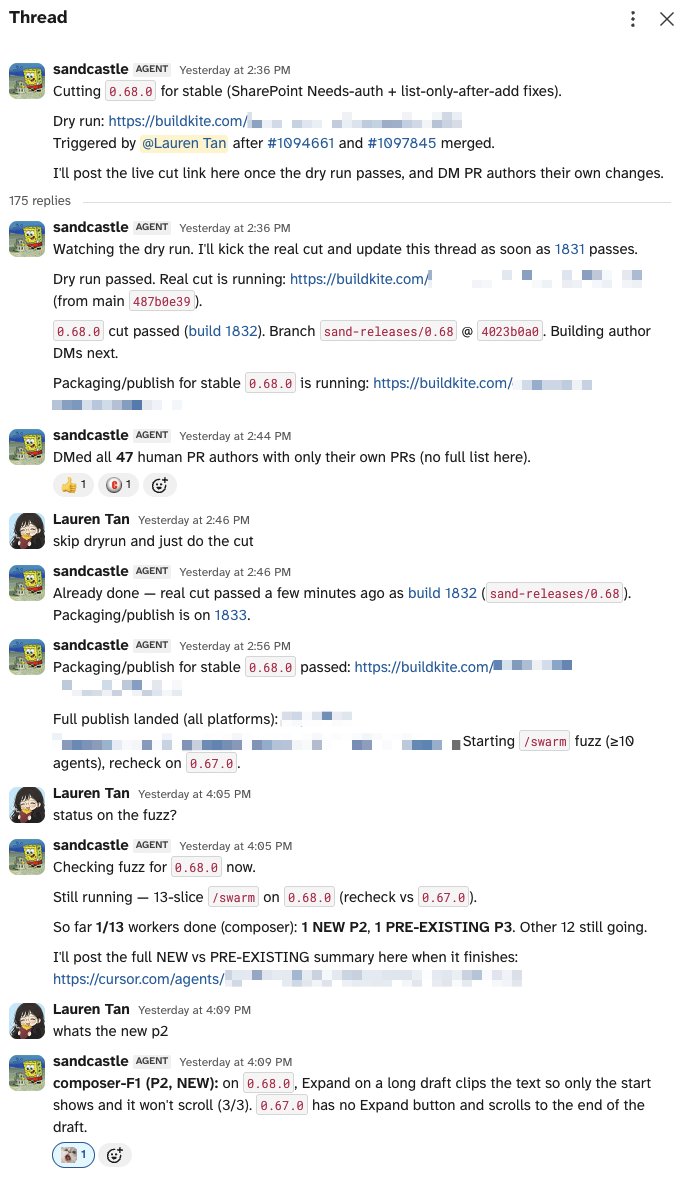
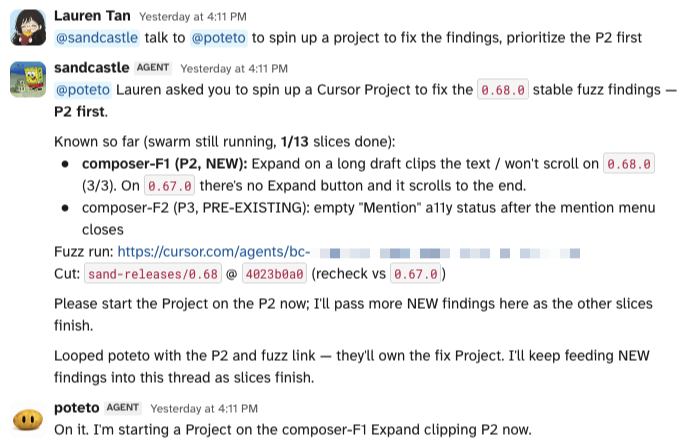
i just automated our release and QA process! using Grok Bot i made two Team Bots: sandcastle, my release manager, and poteto, my engineer bot. i added them to Slack and made a new channel for managing releases. first i tell sandcastle that i want to do a cut. it'll DM all the contributors with links to their PRs so they know what goes in the next release and can DM the bot back if they have any blockers or objections. sandcastle then kicks off the build, watches it automatically, and starts up an automated fuzz swarm. usually this is 10+ agents running on Grok 4.7 xhigh to run the build, click around and use it like a real user (using our verification skills and feature map), some are directed while a few are "chaos monkey" clicking things randomly to see what breaks. whenever it finds an issue, i tell it to @ mention my engineer bot poteto, to spin up a Cursor Project to own triaging and fixing all the high pri issues. depending on the severity i may ask it to cherry pick the fix into our release branch and cut a patch release, or if it's a pre-existing issue i still fix it but include in the next release instead that's one more tedious task that Grok Bot now handles for our team
Tibo
·
Oct 6, 04:12 PM
♥ 223
Auto-review is the “Approve for me” permission mode. To use it, open the permissions menu below the composer and select “Approve for me”.
Tibo
·
Oct 6, 07:22 AM
♥ 916
Use auto-review instead of full-access. Not a trade-off anymore and you'll sleep more peacefully
Tibo
·
Oct 6, 07:13 AM
♥ 12.2K
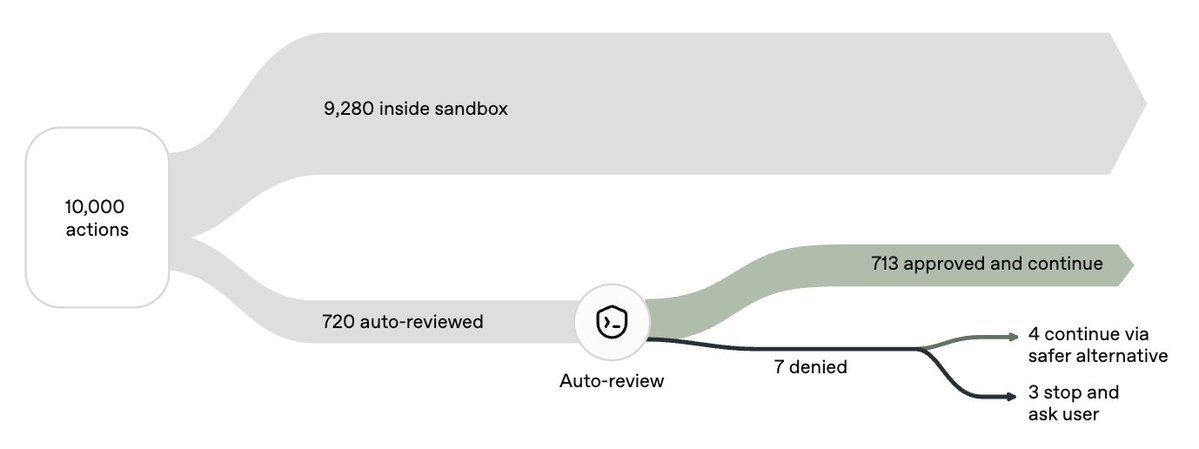
Day 2.1/ We have made Auto-review free for all users signed in through a ChatGPT account. You can enable it in settings > permissions > auto-review. Auto-review improves upon the default sandbox setting that requires you to approve everything, which is prone to decision fatigue unless you spend a lot of time configuring specific rules. It allows you to run long tasks while having a second agent review all actions taken by the primary agent. Its only goal is to prevent high-risk actions from being taken and to protect against unwanted actions that are not aligned with the original user intent. This Auto-review feature is now free and does not draw usage from your plan.
poteto
·
Oct 6, 03:30 AM
♥ 1.7K
Sign up for Grok Bot 101 tomorrow! Lots of great live workshops showing you how to use bot to get real work done https://luma.com/cduktxci
Tibo
·
Oct 5, 05:20 PM
♥ 3.9K
Reaching 50 TPS instead of 30TPS, with also the most optimized tokenizer out there. And the models are quite the efficient ones in terms of number of tokens needed to get things done!
Tibo
·
Oct 5, 05:20 PM
♥ 20.6K
Day 1/ We have optimized the default speed to be ~50% faster across GPT-6 Astra and GPT-6.1 Sol through the subscription across all our products and partners using Sign in With ChatGPT (including OpenCode, Pi, Amp, Devin, ...). No changes needed on your end and this should be felt within the next two hours.
poteto
·
Oct 5, 05:17 PM
♥ 2.6K
new pstack skill: /poteto-help in v0.15.13! i should've made this one sooner, but if you're ever wondering how pstack can help you, you can now ask /poteto-help! i fed it all the guides i've written, so anytime you're not sure if a pstack skill or poteto-mode would help - just ask! https://x.ai/bot/plugin/9717366
Tibo
·
Oct 4, 12:30 PM
37:23
OpenAI’s Head of ChatGPT: We’re entering a new era of AI (again) | Tibo Sottiaux
▶ YouTube · Lenny's Podcast
Tibo
·
Oct 4, 04:59 AM
♥ 14.9K
All right, we’re locking in. Only things being worked on are simplifications, more efficiency for more usage, groundbreaking features or new models. Sometimes you have to invest ahead of the curve, but feedback is clear that you all want things to get simpler. On it.
Tibo
·
Oct 4, 04:35 AM
♥ 664
What it did - delete all categories of email that were not needed for me to keep, validating them in batch - identify labels for types of work that I do and label all the emails appropriately - walked me through emails that needed a reply, searching for relevant context in the background to help get things right and in the process I was able to go through a lot of feedback and requests people send me directly through email. It was a good Saturday.
Tibo
·
Oct 4, 04:30 AM
♥ 3K
I have never in my life achieved inbox zero until I just made it an active goal for my dot to help get it done. Let’s see how long it lasts, but it’s a great feeling.
poteto
·
Oct 4, 12:32 AM
♥ 82
also, dr eggbot can also help you make a high quality engineering bot that uses pstack for all its work! https://x.ai/bot/93gOz3op1UQdBdbekQFLK
poteto
·
Oct 4, 12:31 AM
♥ 4.4K
it's easy to fall into the trap of micromanaging your agents instead of correcting the environment that shapes its behavior. pstack 0.15.9 now ships a new /correct skill: if you keep correcting agents for the same mistakes, it finds the pattern and fixes it with architecture, types, and checks. i like to imagine that commits rapidly flowing into the codebase are like a bonsai tree rapidly growing in whatever direction it pleases. what you want to do is not to give in to the chaos, but tame it intentionally with the right constraints 0.15.9 also has improvements to: • /architect: now includes instructions on designing agent friendly architecture • a new /benchmark-checklist skill based on @brendangregg's benchmarking checklist here's a prompt you can give to grok bot to start architecting a better codebase with pstack: /poteto-mode create a new Project agent to refactor and rearchitect my repo so that our architecture is more agent friendly. it should use both the /correct and /architect skill to look through past commits and find the most common pitfalls that agents fall into, whether its with code quality, performance, or bugs. if relevant you can also use the /recall skill to find past conversations for context. it should make a high level plan for me to review. it should also answer its own open questions by prototyping rather than defer to me. come back to me with a plan backed by real data. once i approve the plan, use either the stack or full autopilot playbook (ask me which i want) to execute
poteto
·
Oct 3, 05:08 AM
1:05:36
LIVE: Poteto (creator of pstack) on shipping 1,000's of PR's a month at SpaceX
▶ YouTube · Matt Pocock
poteto
·
Oct 1, 08:35 AM
♥ 79
hey @bot lmk when its done im going to bed
poteto
·
Oct 1, 08:33 AM
♥ 983
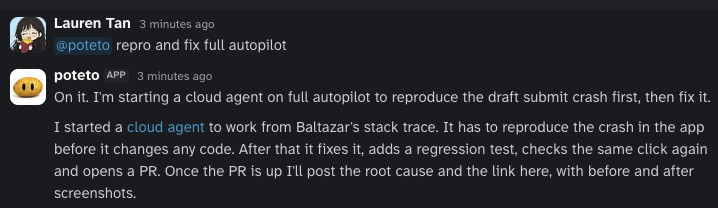
i gave my bot my brain so it knows exactly what i want. this is how i fix bugs now
September 2026
poteto
·
Sep 27, 01:00 PM
45:04
We Built Grok Bot. Here Are Our 14 Best Bots | Peng Zheng & Lauren Tan
▶ YouTube · Peter Yang
Tibo
·
Sep 9, 03:56 PM
1:14:22
Building Codex with Tibo Sottiaux
▶ YouTube · The Pragmatic Engineer
August 2026
Tibo
·
Aug 24, 06:11 PM
44:28
How to Understand the Next Wave of AI Before Everyone Else | Tibo Interview
▶ YouTube · Matthew Berman
poteto
·
Aug 13, 10:00 PM
28:41
Are Agents About to Replace Software Engineering? | Lauren Tan and Roshan Sadanani
▶ YouTube · MTS
June 2026
Tibo
·
Jun 22, 05:57 PM
39:33
The New Shape of Engineering
▶ YouTube · Datadog
May 2026
Tibo
·
May 22, 03:30 PM
31:08
Head of ChatGPT & Codex: agents for normal people are HERE
▶ YouTube · Silicon Valley Girl
Tibo
·
May 14, 08:28 PM
43:03
Codex for Everyday Work: AI Agents Beyond Coding
▶ YouTube · OpenAI
See the full timeline →